Surfaces Built for Wet Feet and Sunscreen
Pool Decks in New Bedford for properties where standard decking materials create slippery conditions or deteriorate quickly around pool areas
Constant water exposure, chlorine splashes, and barefoot traffic create conditions where typical deck materials either become hazardous when wet or require replacement within a few seasons. LivSavvy builds pool deck surfaces using composite or PVC materials that maintain traction when soaked and resist the chemical breakdown that causes wood and lower-grade composites to splinter or fade around pool edges. The result is a surface that stays safer underfoot and holds up to the unique demands of poolside use without the maintenance cycle that wood decking requires in these conditions.
Custom pool deck design starts with the pool's shape and how people move around it—entry and exit points, where furniture clusters, and how the deck connects to other outdoor areas. LivSavvy selects decking materials with slip-resistant textures and installs them with proper spacing for drainage, then adds railings and steps positioned where swimmers naturally transition between the pool and surrounding yard.
Arrange an on-site consultation to measure your pool perimeter and discuss material options that match your outdoor layout..
What Proper Poolside Construction Requires
Building a pool deck involves setting the frame height so the finished surface sits slightly above the pool coping, allowing water to drain away from the pool edge rather than pooling against it. The decking boards run parallel to the longest pool side in most layouts to minimize the number of cut ends exposed to water, and all fasteners use stainless steel or coated screws that won't corrode when chlorinated water sits on the surface during summer.
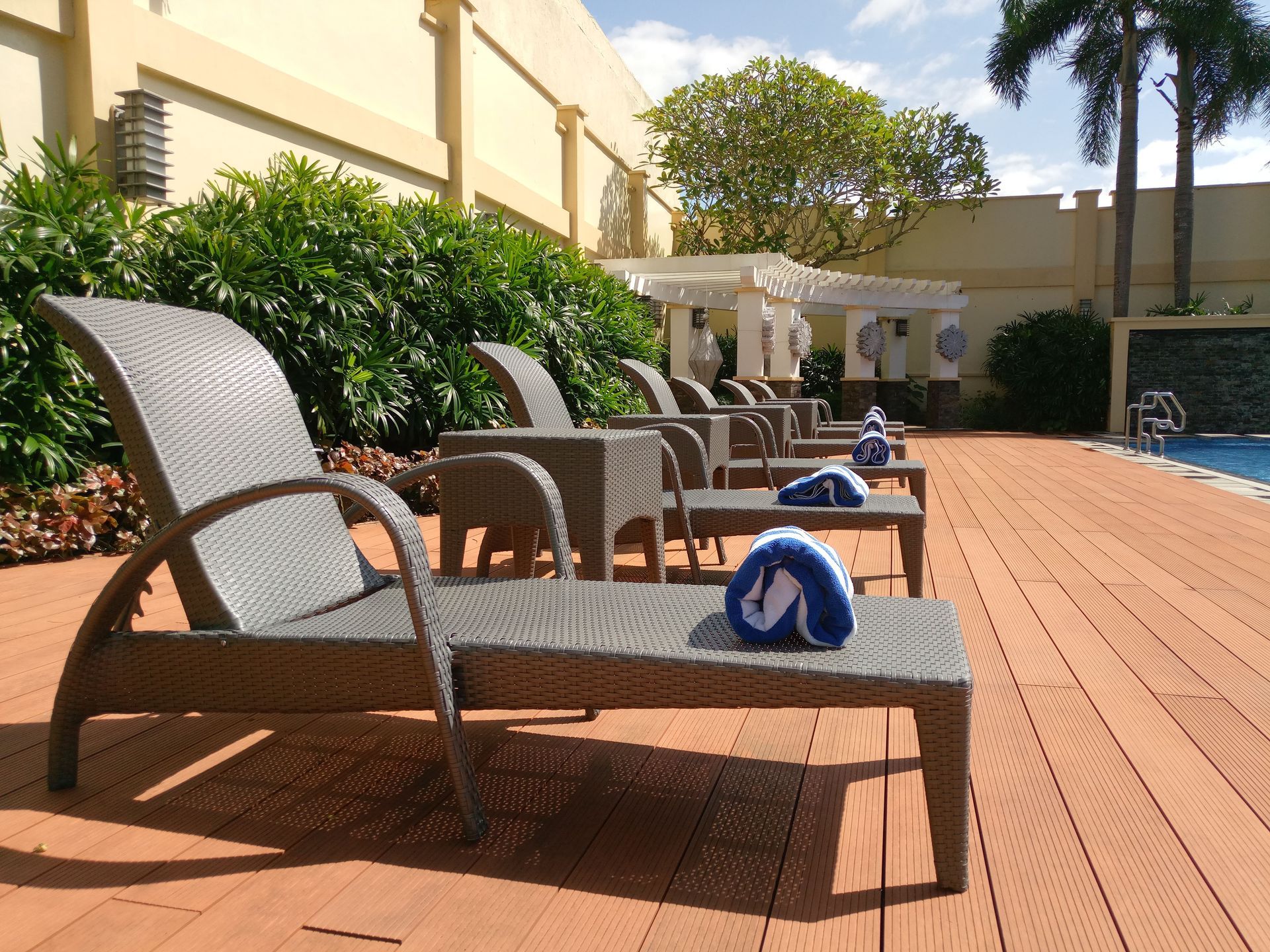
After installation, the deck surface provides a textured walking area that doesn't become slick when wet, and the material doesn't heat up to the point where bare feet are uncomfortable even during peak sun exposure. Pool furniture stays in place without sinking into gaps, and the perimeter remains visually clean because composite materials don't gray or splinter the way pressure-treated wood does after a season of chemical exposure and UV.
Pool decks often include integrated steps that lead down to yard level and railings that meet code requirements for height and spacing while maintaining sightlines to the pool. Some designs incorporate built-in benches or planters along sections where the deck borders landscaping, and slip-resistant stair treads get installed anywhere elevation changes occur between the pool deck and other outdoor areas.
Common Questions About Pool Deck Construction
Homeowners planning pool deck projects in New Bedford typically want to understand material performance and design decisions before construction starts.
What makes a decking material safe around pools?
Slip resistance when wet is the primary factor, which comes from surface texture molded into composite and PVC boards, and these materials also stay cooler underfoot than stone or concrete because they don't absorb and radiate heat the same way.
How wide should the deck extend around the pool?
Most functional pool decks provide at least four feet of walking space on all sides to accommodate furniture and traffic, though many homeowners expand one side to eight or ten feet to create a dedicated seating or dining area adjacent to the pool.
Why do some pool decks use different materials in different sections?
Homeowners sometimes choose premium slip-resistant composites for the immediate pool perimeter where water exposure is constant, then transition to standard composites or wood for sections farther from the water where cost savings matter more than chemical resistance.
How does drainage work on a pool deck?
The deck surface slopes gently away from the pool edge, typically a quarter inch per foot, and the gaps between boards allow water to drain through to the ground below rather than pooling on the surface.
What happens where the pool deck meets existing patios or landscaping?
Transition pieces create a smooth edge where decking ends, and steps get added wherever the deck height doesn't match surrounding grade, with railings installed on any elevation change greater than thirty inches to meet New Bedford building requirements.
LivSavvy designs pool decks that handle New Bedford's summer humidity and frequent use without creating maintenance burdens or safety concerns. Request a detailed estimate based on your pool dimensions and the outdoor features you want to incorporate into the surrounding deck area.