Systems Sized for Nor'easter Rainfall
Gutters in New Bedford for properties facing heavy New England precipitation and ice loading
Standard five-inch gutters installed everywhere regardless of roof size fail during nor'easters when rainfall exceeds their capacity, sending water over the edges and against foundation walls. LivSavvy Construction and Landscaping engineers gutter systems for New Bedford properties by calculating actual roof area and pitch, then sizing gutters and downspouts to handle the intense precipitation common during coastal storms. The work also accounts for ice dam potential during New England winters, where proper slope toward downspouts prevents standing water that freezes and damages gutter seams.
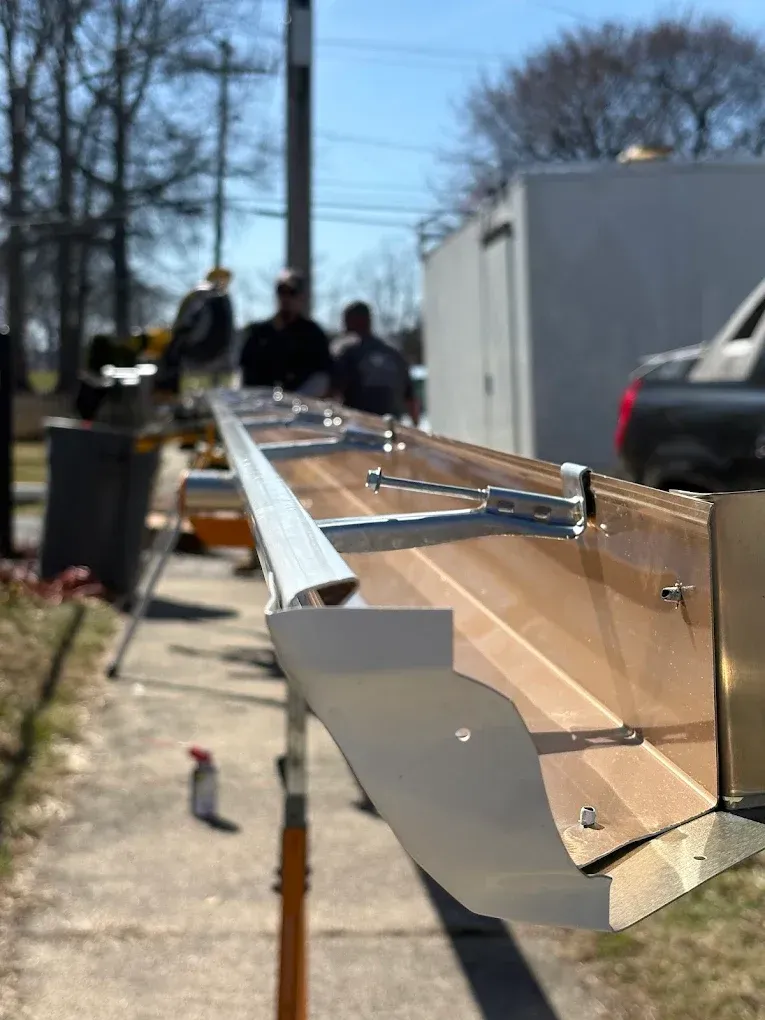
Installation begins with measuring roof sections to determine drainage area, then selecting gutter size and downspout spacing based on those calculations rather than defaulting to undersized components. We set slope carefully toward each downspout so water flows consistently rather than pooling in low sections, and all joints receive professional-grade sealant to prevent leaks that worsen during freeze-thaw cycles.
Arrange a site assessment to determine proper gutter sizing for your roof configuration and drainage needs.
What Engineered Sizing Prevents Long-Term
Gutter sizing affects more than just overflow during storms—undersized systems also contribute to ice dams when insufficient capacity causes water to back up under shingles during winter freezing. We calculate required capacity based on roof area and pitch, then install gutters large enough to handle peak flow while maintaining proper slope throughout each run, ensuring water reaches downspouts rather than sitting in the gutter where it freezes.
Once installation is complete, you'll notice gutters remain clear of standing water even after heavy rain stops, downspouts discharge away from the foundation through properly positioned extensions, and ice formation during winter remains minimal because water drains completely rather than pooling. The system handles nor'easter rainfall without overflow, preventing the soil erosion and foundation moisture problems that develop when water pours over gutter edges repeatedly.
Licensed installers also understand that hanger spacing and fascia attachment methods affect long-term performance, since gutters filled with ice impose significant weight that pulls away from the fascia when attachment is inadequate. Proper installation prevents the sagging and separation common in systems installed without attention to structural support.
Gutter System Questions from Homeowners
New England weather patterns create specific concerns about capacity, ice damage, and maintenance requirements.
How do you determine the right gutter size for a specific roof?
We measure each roof section's length and width to calculate square footage, then apply pitch factor since steeper roofs shed water faster, requiring larger gutters or more frequent downspouts to prevent overflow during heavy rain.
What causes ice dams to form in gutters during winter?
When heat escaping through the roof melts snow, water runs down to cold eaves where it refreezes, and undersized or improperly sloped gutters trap this water instead of draining it, allowing ice buildup that damages shingles and gutter seams.
Why do some gutters overflow during nor'easters?
Five-inch gutters handle moderate rain but lack capacity for the intense precipitation nor'easters deliver, and when combined with inadequate downspout spacing, water velocity exceeds what the system can channel, causing overflow at the front edge.
How does proper slope prevent standing water?
Gutters installed level or with reverse slope trap water that should drain toward downspouts, and this standing water freezes in winter, breeds mosquitoes in summer, and accelerates corrosion in metal gutters year-round.
What downspout spacing works best in New Bedford's climate?
Spacing depends on roof area and gutter size, but coastal properties typically benefit from downspouts every 30 to 40 feet rather than stretching runs longer, ensuring adequate drainage during the sustained heavy rain common in nor'easters.
With licensed installer expertise and understanding of New England weather patterns developed over more than 25 years, LivSavvy Construction and Landscaping sizes gutter systems based on actual roof area calculations rather than standard dimensions. Call (508) 441-1613 to discuss gutter options engineered for your property's specific drainage requirements.