Bathrooms Built to Resist Moisture Damage
Bathroom Remodeling in New Bedford for homes facing high humidity and salt air infiltration
Coastal New England bathrooms face moisture challenges from both interior use and exterior salt air that penetrates building envelopes year-round. Standard bathroom construction fails in these conditions, with mold growth appearing behind tiles, drywall deteriorating around tubs and showers, and ventilation systems unable to remove humidity effectively. LivSavvy Construction and Landscaping remodels bathrooms using comprehensive waterproofing systems, upgraded exhaust capacity rated for coastal humidity levels, and anti-microbial prep materials that prevent the biological growth common in South Coast homes. Licensed and insured methods proven to control moisture in marine environments create bathrooms that remain dry and mold-free through years of use and coastal exposure.
Bathroom remodeling begins with removing existing finishes to assess framing and substrate condition, then addressing any moisture damage before waterproofing begins. Backerboard installation replaces drywall in wet areas, providing a stable, moisture-resistant substrate that will not deteriorate when exposed to steam and water. Full-area waterproofing membranes cover all backerboard surfaces in showers and tub surrounds, extending beyond the immediate wet area to prevent moisture migration into adjacent walls and floors.
Request a bathroom evaluation to identify existing moisture issues and determine the waterproofing approach your remodel requires.
What Comprehensive Waterproofing Accomplishes
Waterproofing bathroom remodels involves layered protection starting with backerboard as the substrate, followed by liquid or sheet waterproofing membranes that seal all seams, corners, and penetrations. Anti-microbial additives in setting materials and grouts inhibit mold and mildew growth in the grout lines and tile adhesive, addressing the biological growth that appears even when bulk water is controlled. Exhaust fan upgrades provide CFM ratings sufficient to remove steam during showers and reduce ambient humidity between uses, with ducting that vents directly outside rather than into attic spaces.
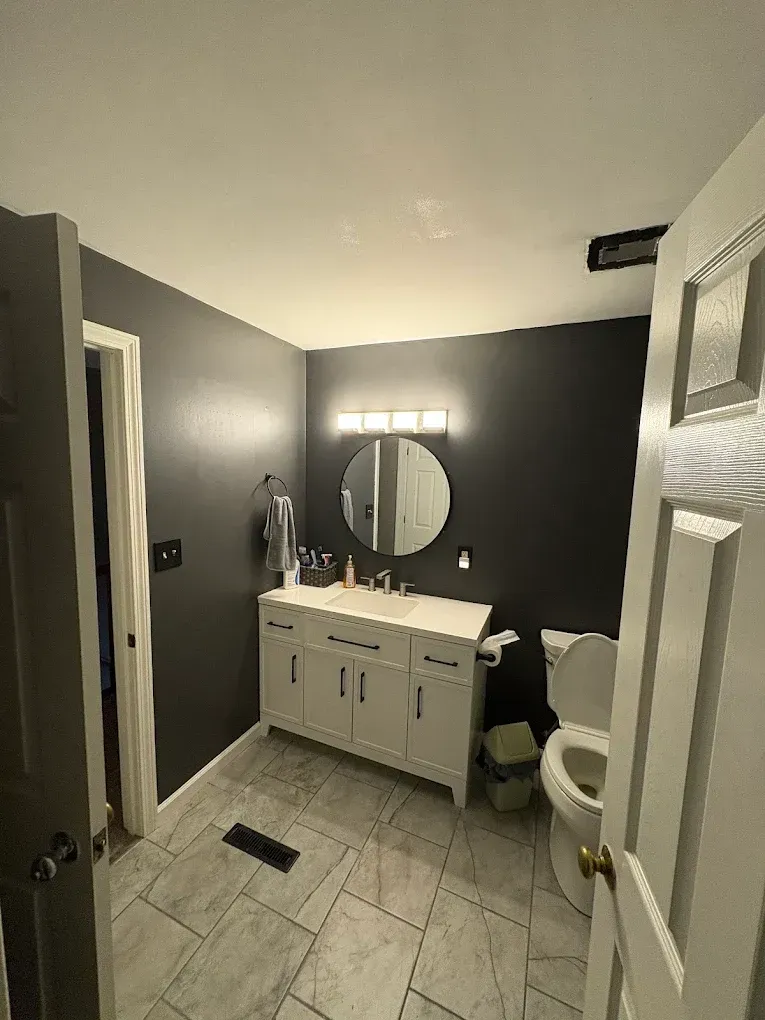
After your bathroom remodel is finished, you will notice surfaces that remain dry between uses, mirrors that clear quickly after showers due to effective ventilation, and no musty odors or visible mold growth in corners and grout lines. The waterproofing system prevents moisture from reaching wall cavities and subfloors where it would cause rot and mold growth invisible until major damage has occurred. Tiles remain firmly bonded to substrates rather than loosening as moisture breaks down adhesive, and grout maintains its appearance without the discoloration and deterioration typical of bathrooms where moisture was not properly controlled during construction.
Coastal bathroom remodeling also addresses the corrosion of fixtures and hardware by selecting finishes rated for marine environments and ensuring proper ventilation reduces the salt-laden humidity that accelerates corrosion. Stainless steel and solid brass fixtures resist corrosion better than chrome-plated or nickel-plated options, maintaining appearance and function longer in coastal conditions. These material selections work together with waterproofing and ventilation to create bathrooms that perform well in New Bedford's challenging environment.
Questions Before Starting Your Bathroom Project
Bathroom remodeling raises questions about moisture control methods and material choices specific to coastal conditions.
What is full-area waterproofing and why does it matter?
Full-area waterproofing applies liquid or sheet membranes across all backerboard surfaces in wet areas, not just seams and corners, creating a continuous waterproof barrier that prevents any moisture penetration into wall cavities and subfloors.
How does backerboard differ from moisture-resistant drywall in bathrooms?
Backerboard is a cement-based panel that will not deteriorate when saturated with water, while moisture-resistant drywall is still paper-faced gypsum that will eventually break down with prolonged exposure despite water-resistant additives.
Why do exhaust fans need higher capacity in New Bedford bathrooms?
Coastal humidity means bathrooms start with higher ambient moisture levels than inland homes, requiring exhaust fans rated at 80-100 CFM or higher to effectively remove steam and reduce humidity to safe levels.
When should anti-microbial materials be used in bathroom remodels?
Anti-microbial additives in grouts, setting materials, and caulks are appropriate for all coastal bathroom remodels, since the combination of interior moisture and exterior salt air creates ideal conditions for mold and mildew growth.
How do you verify waterproofing is complete before tile installation?
Waterproofing membranes are inspected for continuous coverage with no gaps or voids, seams are verified properly overlapped and sealed, and corners and penetrations receive additional reinforcement to ensure the barrier is intact before tiles are set.
LivSavvy Construction and Landscaping applies proven moisture control methods to bathroom remodels throughout New Bedford, using comprehensive waterproofing approaches developed through decades of coastal work. Schedule a consultation to discuss your bathroom's specific moisture challenges and remodeling options.