Stability That Handles Seasonal Humidity Swings
Engineered wood flooring in New Bedford for homes where solid hardwood movement becomes problematic
Properties with below-grade rooms or significant seasonal humidity changes see solid hardwood gap and cup as moisture content shifts, which is where engineered construction offers an alternative. The cross-layered core resists expansion and contraction more effectively than single-piece boards, allowing installation in spaces where solid wood would fail within a few years. LivSavvy installs engineered wood flooring across most rooms in New Bedford homes except bathrooms, where standing water still compromises any wood-based product regardless of construction method.
Engineered planks consist of a thin hardwood veneer bonded to layers of plywood or high-density fiberboard arranged with perpendicular grain orientation. This cross-ply construction counteracts the natural tendency of wood to move with moisture changes, keeping planks flat and tight even when indoor conditions fluctuate.
Request a detailed estimate based on current subfloor condition and room-specific humidity patterns.
Why Cross-Layer Construction Works for Dimensional Stability
The installation process mirrors solid hardwood in many respects—planks fasten to the subfloor or float over underlayment depending on product design—but the core structure prevents seasonal gapping that occurs with solid boards. The hardwood veneer on top provides authentic wood appearance and texture, though the thickness of that veneer determines whether refinishing is possible and how many cycles the floor can tolerate.
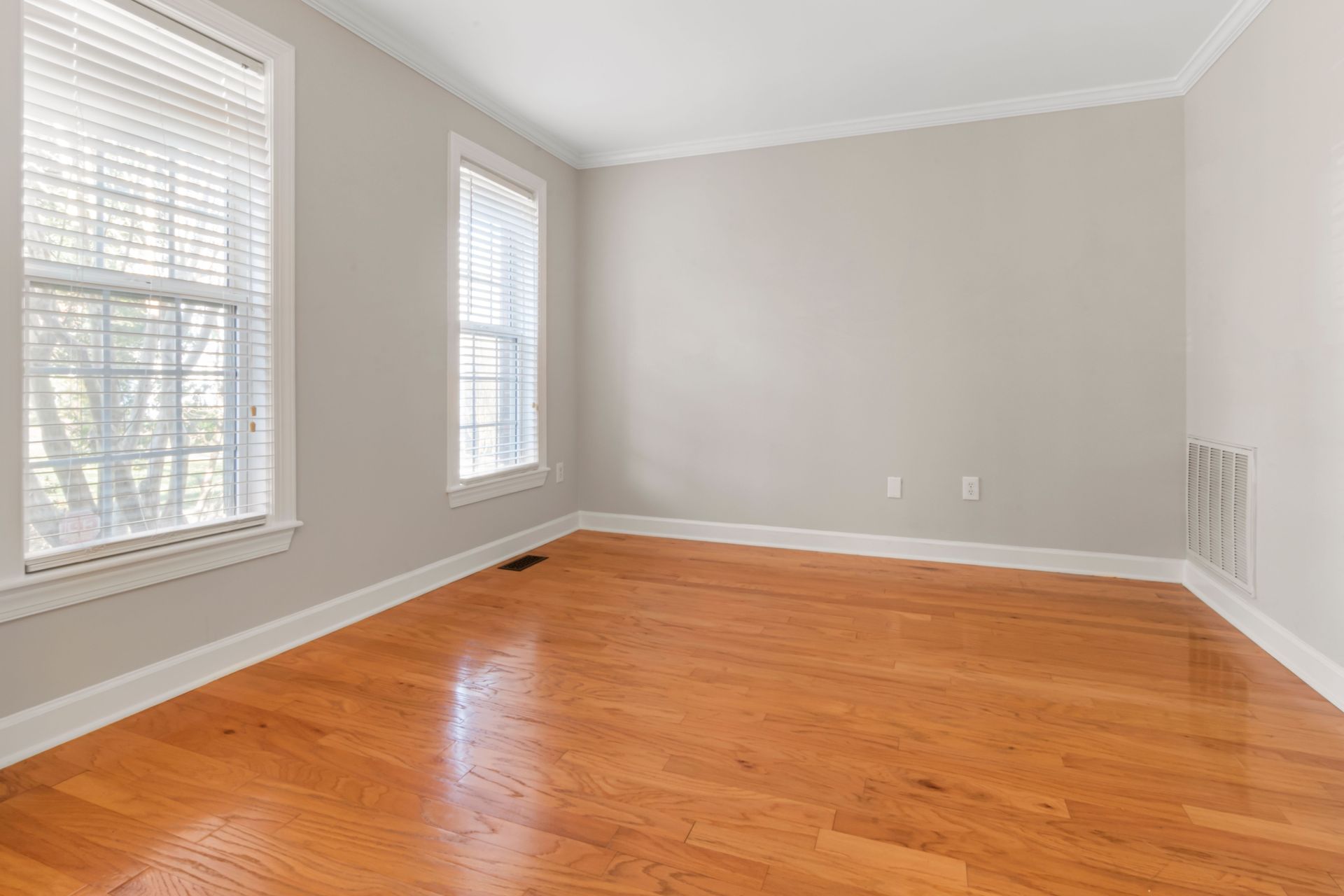
After installation, you'll see floors that maintain consistent gaps between planks year-round instead of opening up during heating season and closing in summer. The surface looks and feels like solid hardwood because the top layer is actual wood, but the dimensional movement that causes cupping, crowning, and separation doesn't occur even in rooms with less stable environmental conditions.
Engineered flooring can't be refinished like solid hardwood because the veneer layer is too thin to withstand sanding—most products allow one light sanding at most, and some can't be refinished at all. This trade-off means the floor performs better during its service life but must be replaced rather than restored when surface wear becomes unacceptable, unlike solid planks that get multiple refinishing cycles.
What Property Owners Usually Ask
Clients considering engineered wood often compare it to solid hardwood and want specifics on performance differences.
What makes engineered flooring more stable than solid hardwood?
The cross-ply core construction has grain running in different directions through multiple layers, which mechanically prevents the wood from expanding and contracting as much as a single solid piece does when moisture content changes.
Can engineered wood be refinished if it gets scratched?
Most engineered products have veneer layers too thin for traditional drum sanding, though some thicker-veneer options tolerate one light screen-and-recoat cycle before you sand through to the core material.
Why shouldn't engineered wood go in bathrooms despite being more stable?
Stability refers to dimensional movement, not water resistance—prolonged exposure to standing water still causes the wood veneer to swell and delaminate from the core, regardless of how the layers are constructed.
How does engineered flooring perform over radiant heat systems in New Bedford homes?
The reduced expansion and contraction makes engineered wood a better candidate for radiant floor heating than solid hardwood, though manufacturers specify maximum temperature limits that must be observed to prevent delamination.
What thickness of wear layer should I look for in engineered products?
Veneer thickness between two and six millimeters determines refinishing potential and how well the floor hides subfloor imperfections, with thicker veneers performing more like solid hardwood but costing proportionally more.
LivSavvy evaluates room conditions before recommending engineered versus solid hardwood, factoring in humidity patterns and client expectations for long-term refinishing. Set up a material review to compare veneer thicknesses and core construction options for your specific application.