
Details That Define a Kitchen's Daily Function
Hardware and fixtures in New Bedford for kitchens where cabinet function, drawer operation, or faucet performance no longer meets how the space is used
Cabinet pulls that loosen over time, hinges that cause doors to sit crooked, and faucets that no longer seal properly are all conditions that signal a kitchen has aged past its original hardware specification. LivSavvy selects and installs hardware and fixtures as part of kitchen remodeling projects in New Bedford, treating these components as functional decisions rather than purely aesthetic ones. The size of a pull relative to a drawer box, the soft-close mechanism on a hinge, and the reach of a faucet spout over the sink basin each affect how the kitchen performs every day.
Hardware selection involves matching component specifications to the cabinet construction and drawer system already chosen. Overlay doors require different hinge geometry than inset doors. Deep drawers used for pots and pans require heavier-duty slides rated for the load weight. Faucet selection depends on the number of pre-drilled sink holes, the depth of the basin, and whether a separate sprayer, soap dispenser, or filtration tap will be mounted alongside it. These measurements are confirmed against actual cabinet and sink dimensions before any orders are placed.
Submit your cabinet and sink specifications to get hardware recommendations sized and rated for your specific kitchen layout..
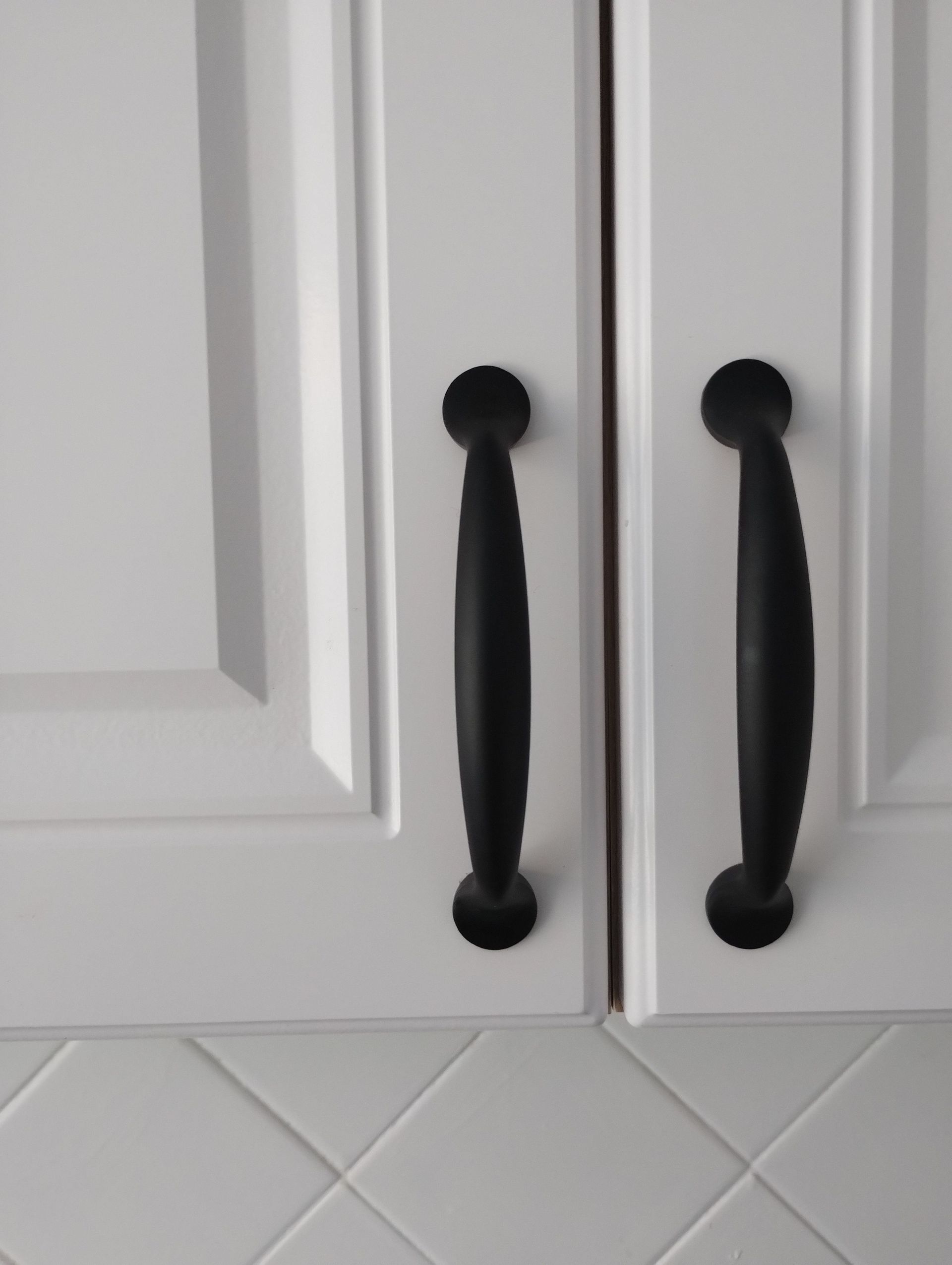
What Proper Hardware Selection Requires
Hardware installation during a kitchen remodel follows a specific sequence: cabinet boxes are installed first, doors and drawer fronts are hung, and then hardware is mounted with jigs that guarantee consistent spacing across every door and drawer in the run. This sequencing matters because hardware mounted before doors are hung risks misalignment when the door position is adjusted during hanging. Faucet installation is completed after countertops are set and the sink is dropped in, so the exact hole configuration is confirmed before the faucet is brought in for final mounting.
Once hardware is installed correctly, cabinet doors close without requiring a secondary push, drawers extend smoothly and return with consistent resistance, and faucet handles operate without stiffness or wobble at the base. Faucets with ceramic disc valves—rather than older rubber washers—maintain smooth operation significantly longer without requiring seat replacement or drip repairs, which is a meaningful long-term functional difference in a high-use sink location.
Finish selection for hardware involves more than color matching. Lacquered finishes require softer cleaning methods to avoid surface wear, while brushed metal finishes tend to hide surface contact marks better in high-touch locations like cabinet pulls near the stove. These trade-offs are reviewed during the selection phase so finishes are chosen with realistic maintenance expectations in mind.
What Homeowners Usually Ask About Hardware
Hardware and fixture decisions come up late in the planning process for many homeowners, but they affect both the feel of the kitchen and its long-term durability. These questions reflect what typically surfaces before selections are finalized.
How is pull size matched to cabinet and drawer proportions?
Pull length is scaled to the width of the drawer front—wider drawers typically use longer bar pulls to maintain visual proportion and provide a balanced grip point across the full width.
What determines whether soft-close hinges are appropriate for a cabinet?
Soft-close mechanisms are standard on most new frameless cabinets, but face-frame cabinets may require specific overlay measurements to confirm hinge compatibility before ordering.
Why does faucet spout height matter for kitchen sink selection?
A high-arc spout provides clearance for large pots but can cause splash in shallow basins—spout geometry is matched to basin depth during the fixture selection phase to avoid this conflict.
When should hardware finishes be finalized in the remodel timeline?
Hardware finishes should be confirmed before cabinet orders are placed, as some cabinet manufacturers offer coordinated interior hardware that must be specified at the time of the cabinet order.
What maintenance differences exist between hardware finish types?
Polished finishes show water spots and fingerprints more readily than matte or brushed alternatives, which matters most in kitchens with heavy daily traffic near the sink and stove areas.
LivSavvy works through hardware and fixture decisions as a structured part of the kitchen remodeling process, so every component is sized and specified before installation begins rather than adjusted afterward. Arrange a planning consultation to review your cabinet configuration and finalize hardware selections that fit both the design and the daily demands of your kitchen.