Fixing Problems Before They Spread
Deck Repair in New Bedford for structures showing localized damage, loose components, or safety issues that don't yet require full replacement
Deck boards with visible cracks or soft spots indicate moisture penetration that will spread to adjacent boards and underlying framing if not addressed, and wobbly railings or popped fasteners create immediate safety hazards that worsen with each seasonal freeze-thaw cycle. LivSavvy repairs damaged sections by replacing compromised boards, reinforcing frame members showing early rot, and securing loose railings before structural problems expand beyond economical repair. You end up with a deck that's safe to use and will last several more seasons instead of one that's progressing toward failure while you wait.
Repair work starts with identifying which components are damaged versus which are still structurally sound, then replacing boards, joists, or railing sections as needed. In many cases, a dozen damaged floor boards and one rotted joist can be replaced without disturbing the rest of the deck, restoring structural integrity at a fraction of replacement cost.
Arrange an on-site consultation to assess which deck components need immediate attention and which can remain in service..
What Changes After Structural Issues Are Addressed
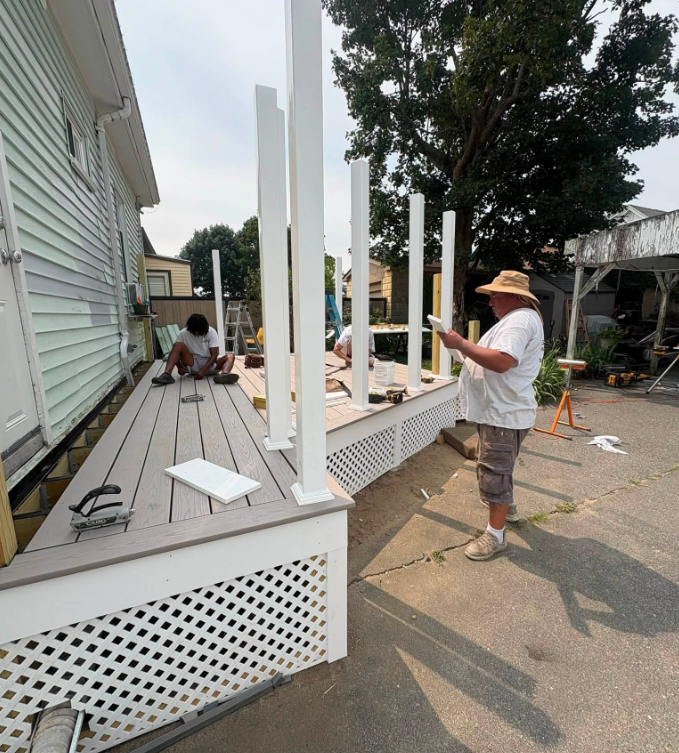
Deck repairs involve removing damaged boards back to the nearest joist, inspecting the framing underneath for hidden rot, and installing new boards that match the existing decking as closely as possible. When joists show damage, sister boards get bolted alongside the weakened member to restore load capacity, and any railing posts that have loosened get refastened or replaced depending on the condition of the wood at the attachment point.
After repairs, the deck surface feels solid when you walk across previously soft or bouncy areas, and railings no longer shift when pressure is applied. Replaced boards initially look newer than the surrounding weathered wood, though this difference fades over one season as the new material weathers to match, and the repair stops the progression of rot into framing that's still in good condition.
Repairs don't extend the life of the entire deck indefinitely but address specific failures that would otherwise accelerate deterioration of the whole structure. Homeowners often use repairs to gain three to five additional years from a deck that's otherwise functional, postponing the larger expense of full replacement until it makes sense financially or when damage becomes too widespread to fix piecemeal..
Answers to Frequent Service Questions
Homeowners considering deck repairs typically need to understand what's fixable and what signals that replacement makes more sense.
What deck problems are worth repairing versus replacing the whole structure?
Isolated board damage, a few rotted joists, loose railing sections, or failed fasteners are all repairable if the majority of the deck remains structurally sound, but widespread floor rot, sagging frame members, or ledger board failure usually indicate that repair costs will approach replacement costs without solving underlying issues.
How do you match new boards to old decking?
Exact matches are difficult once wood has weathered, but using the same wood species and grade allows new boards to weather toward the existing color over six to twelve months, and some homeowners choose to refinish the entire deck surface after repairs to create uniform appearance immediately.
Why do railings become loose over time?
Railing posts are exposed to more lateral stress than floor boards and often attached with fasteners that corrode in New Bedford's coastal humidity, so the connection points weaken even when the posts themselves remain sound, requiring refastening or reinforcement with additional brackets.
When should joists be reinforced instead of replaced?
If a joist shows rot at one end but remains solid along most of its length, sistering a new board alongside the damaged section restores strength without requiring removal of all the decking above, but joists with rot in multiple locations or severe sagging need full replacement.
What prevents repaired sections from failing again quickly?
Repairs work long-term when the cause of the original damage is addressed, which often means improving drainage around the deck perimeter, adding flashing where water was entering the structure, or sealing cut ends of new boards to prevent moisture absorption that leads to rot.
LivSavvy evaluates deck damage in New Bedford to determine which repairs restore safety and extend usable life without unnecessary replacement of components that still function properly. Schedule a property evaluation to review your deck's condition and identify which issues need immediate attention.