Outdoor Spaces Built for Salt Air
Decks in New Bedford for properties facing Buzzards Bay coastal exposure
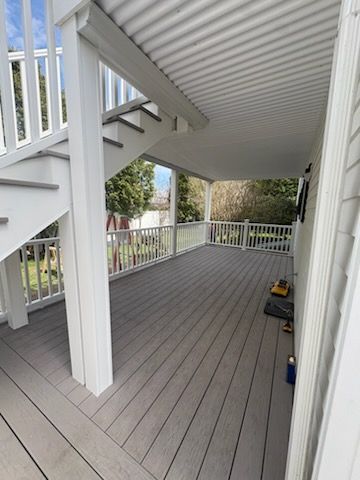
When nor'easter winds carry salt spray inland and marine air accelerates corrosion on standard fasteners, deck construction requires engineered connections and marine-grade materials that withstand coastal New England conditions. LivSavvy Construction and Landscaping installs decks across New Bedford using stainless steel fasteners and lag bolt ledger connections designed specifically for the coastal exposure common throughout Buzzards Bay communities. You'll notice the difference when fasteners remain corrosion-free after multiple winters and deck boards stay secured despite the wind loads that loosen standard installations.
The installation process begins with properly flashing the ledger board where the deck attaches to your home, using ice-and-water barrier and metal flashing to prevent moisture intrusion that causes rot in the rim joist. Lag bolts secure the ledger to the home's framing at engineered intervals, and all fasteners exposed to weather receive stainless steel or coated hardware rather than galvanized options that corrode in salt air.
Schedule an on-site consultation to review deck design options that meet coastal exposure requirements.
What Marine-Grade Construction Actually Means
Marine-grade deck construction uses stainless steel fasteners throughout the structure, not just on visible surfaces, preventing the hidden corrosion that weakens connections between joists and beams. We engineer post footings to resist frost heave in New England's freeze-thaw cycles and size framing members to handle snow loads and wind uplift specific to coastal locations, ensuring the deck performs safely under conditions that standard builds do not anticipate.
Once construction is complete, your deck will shed water properly due to correct joist spacing and board layout, resist fastener staining from rust bleed even in direct salt spray, and maintain structural integrity through wind events that loosen poorly connected assemblies. The ledger connection remains watertight because proper flashing directs moisture away from the home's sheathing, preventing the hidden rot that eventually causes deck collapse.
Coastal decks also require attention to drainage below the structure, since trapped moisture and poor ventilation accelerate decay even when using pressure-treated lumber. We design deck heights and joist layouts that allow airflow beneath the structure and prevent standing water on the ground surface below.
Common Deck Construction Questions
Homeowners planning deck projects in coastal areas typically want to understand material choices, connection methods, and longevity expectations.
What makes stainless steel fasteners necessary in New Bedford?
Standard galvanized fasteners corrode rapidly in salt air, leaving rust stains on deck boards and weakening connections between structural members, while stainless steel resists corrosion even in direct coastal exposure.
How do you prevent rot where the deck attaches to the house?
We install ice-and-water barrier between the ledger and home sheathing, then add metal flashing above the ledger to direct water away from the connection, preventing moisture intrusion into the rim joist where rot starts invisibly.
What joist spacing works best for coastal deck boards?
Spacing depends on board thickness and material, but closer joist intervals reduce bounce and prevent cupping in composite materials, while proper spacing also allows ventilation that reduces moisture buildup beneath the deck surface.
Why do some decks fail during windstorms?
Inadequate ledger connections or missing structural blocking allow lateral movement that loosens fasteners over time, and undersized footings permit shifting that stresses connections until failure occurs during high wind events.
How long does a properly built coastal deck last?
Lifespan depends on materials and maintenance, but marine-grade fastener systems and proper flashing prevent the two most common failure modes—fastener corrosion and ledger rot—extending structural life well beyond standard construction methods.
LivSavvy Construction and Landscaping has built coastal decks throughout New Bedford and surrounding communities for more than 25 years, using marine-grade fasteners and engineered connections as standard practice. Contact us to discuss deck design and material options suited to your property's exposure level.