
Finished Details That Complete Your Deck
Deck Skirting in New Bedford for properties where exposed undercarriage detracts from curb appeal
LivSavvy installs deck skirting that conceals the area beneath your deck while complementing your home's exterior materials and style. The finished appearance eliminates the visual gap between your elevated deck structure and the ground, creating a cohesive transition that matches your property's architectural character. Property owners in New Bedford choose skirting when they want outdoor spaces that look intentional from every angle, not just from the top surface.
Deck skirting involves selecting materials that withstand ground-level moisture exposure while matching or coordinating with existing trim, siding, or railing systems. The installation accounts for necessary ventilation to prevent moisture buildup under the deck, access panels for storage or utility maintenance, and grading considerations that affect how the skirting meets the ground plane.
Schedule a property evaluation to review material options and ventilation requirements for your deck structure..
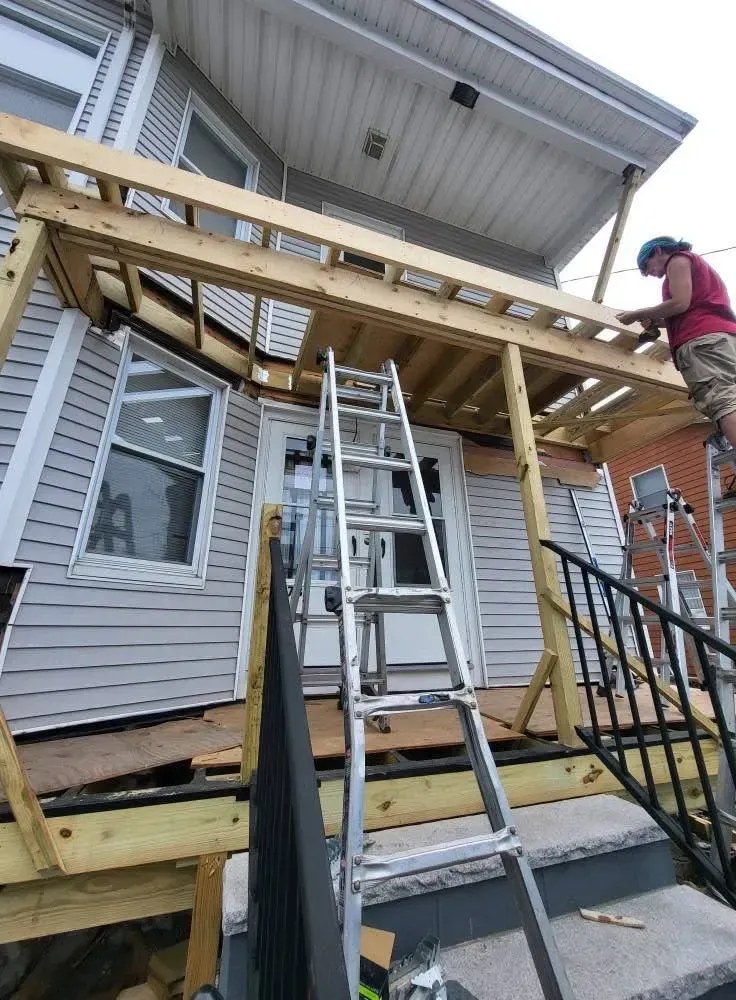
What Proper Skirting Installation Requires
The installation process begins with measuring the deck perimeter and identifying grade changes that affect panel height and attachment methods. Material selection depends on exposure to splash-back from rain, proximity to sprinkler systems, and whether the space beneath the deck remains accessible for storage or utility access.
Once skirting panels are installed, you notice the visual weight of your deck changes—it no longer appears to float above the lawn but instead reads as a grounded extension of the home. The enclosed perimeter prevents animals from nesting beneath the structure and keeps lawn debris from accumulating in visible areas. LivSavvy incorporates access points that maintain functionality while preserving the clean exterior appearance.
Ventilation openings remain critical even with full perimeter coverage. Without airflow beneath the deck, moisture from ground saturation or seasonal humidity can accelerate wood decay in structural beams. Screened vents or lattice sections allow air circulation while maintaining the finished appearance that skirting provides..
Questions Before Starting Your Project
Property owners in New Bedford typically ask about material durability, ventilation standards, and how skirting affects access to utilities before moving forward with installation.
What materials work best for ground-level exposure?
Composite or PVC skirting resists moisture and insect damage better than wood alternatives, particularly in areas with poor drainage or where sprinkler systems create regular saturation near the foundation.
How is ventilation maintained with full skirting?
Screened vent panels or lattice sections are incorporated at intervals around the perimeter, allowing continuous airflow while preventing animal entry and maintaining a finished appearance.
Can skirting include access panels for storage?
Yes, hinged or removable sections can be built into the design at locations where you need to reach plumbing shut-offs, store seasonal equipment, or access crawl space entries without compromising the exterior appearance.
What happens when the ground slopes around the deck?
Panel heights adjust to follow grade changes, with the bottom edge remaining close to the ground without direct soil contact to prevent moisture wicking and material degradation over time.
How does skirting attach to the deck structure?
Mounting methods depend on your deck's framing configuration—panels typically fasten to rim joists or blocking installed between support posts, with fasteners concealed behind trim or within panel seams for a clean finish.
LivSavvy designs skirting systems that balance visual consistency with the practical requirements of ventilation and access. Request a detailed estimate based on your deck's perimeter dimensions and site-specific grading conditions.